According to Hedgeye, America is undergoing a structural shift toward home-based living as declining social participation, changing demographics & advancing tech reshape consumer behavior. This trend is creating long-term opportunities for home-focused businesses while challenging industries that rely on in-person social interaction.

No Bull Economics
ManpowerGroup 2Q26: Staffing Recovery Drives a Short Squeeze
ManpowerGroup delivered stronger-than-expected 2Q results as staffing demand accelerated across key industrial & tech sectors, reflecting improving U.S. hiring trends. The company’s operational turnaround is gaining momentum from its AI-driven transformation strategy, cost reduction initiatives & strategic partnerships. Shares surged post-earnings.
Costco June Sales: Strong Month
Costco reported strong June results: total sales +10.6%; headline comps +8.8%; core comps (ex. gas & FX) +7%; +21% e-commerce; and healthy membership trends. Investors sent shares lower because headline comp growth slowed from +12.5% in May to +8.8% in June although much of this delta came from gas & calendar effects. With Costco trading at such a high valuation, investors expect growth acceleration.
JPMorgan Chase & Co. 2Q26: Consumers Remain Resilient as Capital Markets & AI Lending Drive Growth
JPMorgan highlighted continued U.S. consumer resilience, which is supported by healthy spending, solid credit quality & a strong labor market despite elevated inflation & fuel prices. Capital markets activity remained robust, fueled by strong IPO, M&A & trading volumes, while AI-driven investment continues to support commercial loan growth, particularly in data centers & digital infrastructure. Management also noted healthy deposit growth, rising client investment assets & disciplined underwriting standards despite an increasingly active lending environment.
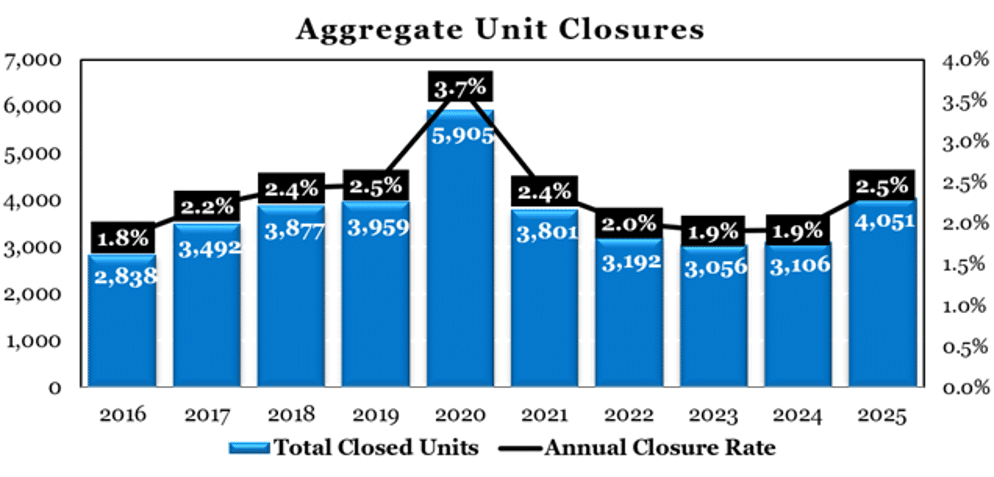
U.S. Restaurant Industry: Has Supply Permanently Outpaced Demand?
The persistent decline in guest traffic across much of the U.S. restaurant industry since covid increasingly appears to reflect a structural imbalance rather than a cyclical slowdown. While industry players have largely focused on menu price inflation, consumer fatigue, or shifting preferences, a more compelling explanation is that the industry has too much capacity relative to its long-term demand base. Same-store traffic has remained negative across many publicly traded restaurant chains despite historically low unemployment, rising household incomes & resilient consumer spending. In previous economic expansions, these conditions would typically have supported positive traffic growth. The fact that they have not suggests that the industry’s supply-demand equilibrium has fundamentally changed.
PepsiCo 2Q26: North American Weakness Driven by ↓ Discretionary Demand
PepsiCo delivered +2% organic revenue growth during 2Q, driven by strong international demand, portfolio transformation & continued momentum in healthier food & beverage categories partially offset by North America weakness. The company continues to invest in affordability, product reformulation, AI & supply chain optimization while expanding its portfolio with functional beverages & permissible snacks. Management reaffirmed its FY26 organic revenue outlook (+2% to +4%), supported by international strength, productivity initiatives & confidence in a gradual North American recovery.
Consumer Confidence Improves as Moderating Inflation Fears Offset Labor Market Concerns
According to the Conference Board, consumer confidence edged higher in June as lower oil prices helped ease inflation concerns. Despite this modest improvement, consumers remain increasingly cautious about the labor market, with perceptions of job availability deteriorating to their weakest level in 4+ years. Recession fears remain relatively contained and spending plans for restaurants & other services remain resilient.
Kura Sushi 3QFY26: Slowing Momentum
Kura Sushi continues to invest in long-term growth drivers → restaurant development, anime collaborations, loyalty enhancements & operational automation. 3Q revenue increased +16% as new unit openings offset a -5.1% traffic decline while disciplined cost controls drove meaningful margin expansion & EBITDA growth. Although management lowered FY26 sales guidance due to new build construction delays & persistent macro pressures, it remains confident in its ability to deliver positive FY27 comps & continued unit expansion.
Constellation Brands 1QFY27: Flattish FY27 Beer Sales Outlook < 1Q Results
Constellation Brands’ 1Q beer net sales increased +2%, supported by pricing, shipment growth & continued strength across Modelo, Corona & Pacifico. Manufacturing efficiencies helped expand beer gross margins. The company’s long-term brand relevance benefits from investments behind major sporting events, digital capabilities & its growing non-alcoholic portfolio. Management’s FY27 outlook (beer net sales between -1% & +1%) reflects a slow-down from 1Q results.
Guggenheim 2Q26 Report on the Economy
Guggenheim expects the U.S. economy to remain resilient through 2026, supported by AI-driven investment, healthy corporate spending & a stable labor market despite moderating consumer demand. Inflation is expected to gradually ease but remain elevated in the near term due to energy prices & AI-related investment & the Fed is likely to keep interest rates unchanged. The firm also expects Treasury yields to remain elevated as resilient growth, persistent fiscal deficits & ongoing macro uncertainty continue shaping the investment landscape.
Nobull consumer research weekly

Get Corporate & Market Insights in your inbox
A Restaurant Research LLC Company