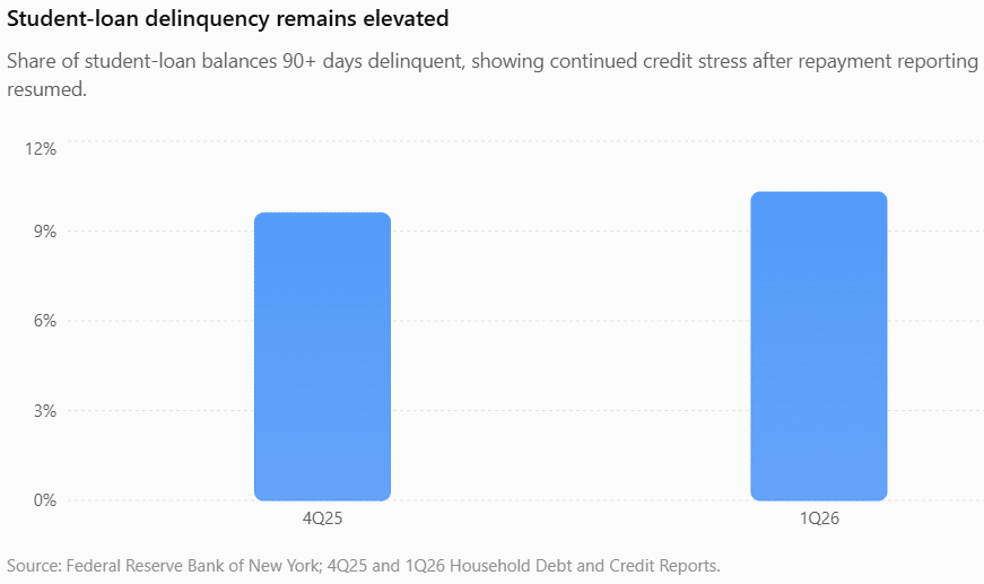
While federal student-loan payments resumed in October 2023, the expiration of the September 2024 on-ramp marked a more important inflection point for consumer credit as it delayed the reporting of missed payments. Since early 2025, student-loan delinquencies and defaults have surged as those missed payments became reportable, with the New York Fed estimating millions of borrowers entered default in late 2025 & early 2026. This suggests the consumer impact of the repayment restart is still working through household balance sheets, potentially creating an ongoing headwind to discretionary spending, including restaurant consumption.
Key Insights
- Student-loan stress represents a growing consumer headwind. Student-loan balances 90+ days delinquent increased to 10.6% in 1Q26 as 3.6MM borrowers entered default across 4Q25–1Q26. Even as new defaults moderate, damaged credit profiles could constrain future spending.
- Fed research estimates resumed student-loan payments reduce spending by $12.20/week per $10,000 of debt, representing an estimated $80B annualized reduction in consumer spending or 0.4% of PCE.
- Pressure could persist as ~7.5MM former SAVE borrowers transition to new repayment plans, with potentially higher monthly payments creating an additional source of household cash-flow and consumer credit stress.
- Restaurant implications center on traffic/value pressure. Financially stretched consumers may reduce discretionary food-away-from-home occasions & increasingly demand value-oriented QSR offers. This is likely to pressure frequency, delivery & higher-ticket restaurant occasions.