Equities Pause During July While Energy Surges Amid Shifting Monetary Policy Expectations
Overall Market Performance
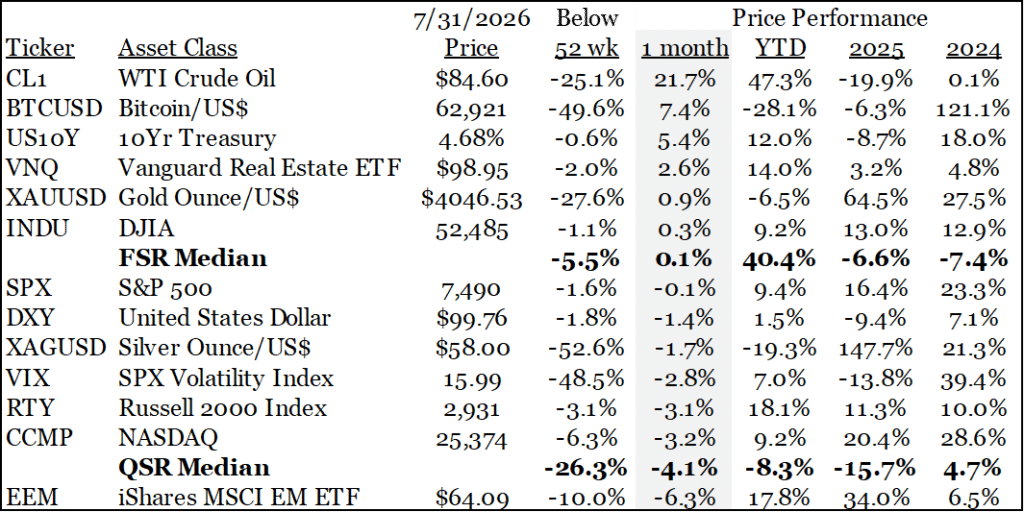
July reflected a mixed performance across major asset classes as markets digested strong economic data, evolving expectations for Fed policy and ongoing geopolitical uncertainty. U.S. large-cap equities were relatively resilient but lost momentum, with the S&P 500 declining -0.1% and the Nasdaq falling -3.2% as investors rotated out of higher-growth tech stocks following a strong first half of the year. Small-cap stocks underperformed, with the Russell 2000 declining -3.1%, reflecting a more cautious stance toward economically sensitive segments of the market. Fixed income weakened as the 10-year U.S. Treasury yield rose to 4.7% during the month, driven by resilient economic growth and persistent inflation expectations that temper hopes for monetary easing. Within real assets, WTI crude oil surged +22% amid tightening supply expectations and geopolitical tensions, while gold posted a modest +1% gain as continued central bank demand and safe-haven buying offset the headwind of higher real yields. Meanwhile, the VIX fell -2.8%, suggesting investor sentiment remained relatively constructive despite modest equity weakness, elevated valuations and continued uncertainty surrounding trade policy, inflation and the path of interest rates.
QSR Stock Performance
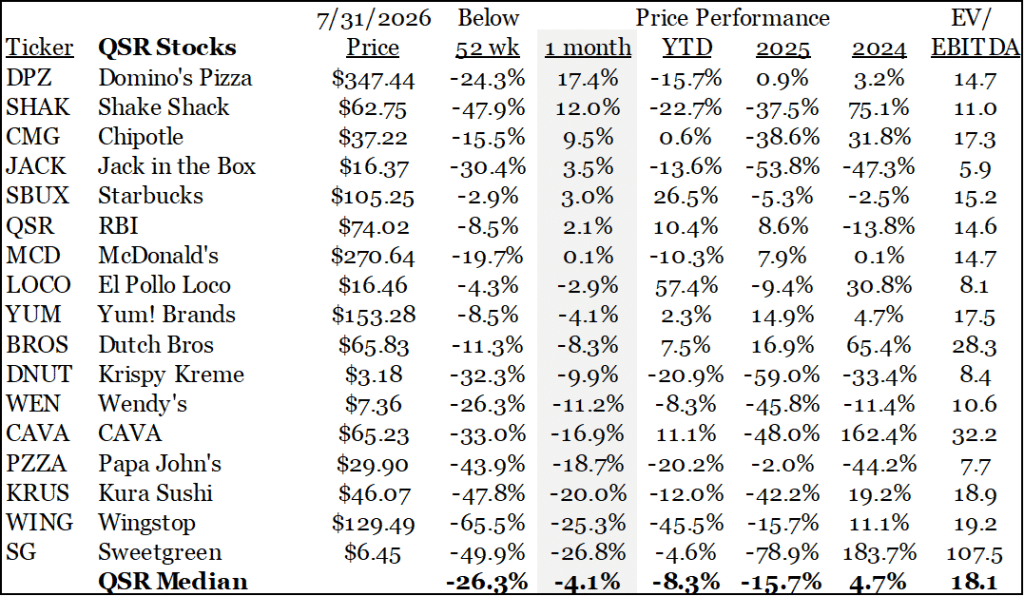
- Fast food stocks were pressured by Taco Bell’s outbreak of Cyclospora infections linked to shredded iceberg lettuce supplied by Taylor Farms de Mexico and ongoing concerns about lower-income consumers.
- Also, investors rotated away from defensive, consumer names toward more cyclical sectors in July, creating valuation pressure across parts of the restaurant group.
- Domino’s was up +17% during July despite weaker-than-expected 2Q EPS & same-store sales (+0.1%), as investors focused instead on resilient order growth, continued market share gains and reaffirmed FY26 guidance based upon management’s confidence that 2H sales will improve.
- Wingstop’s shares fell as investors focused on the weaker-than-expected comp decline (-7.5%), reduced FY26 comps guidance and continued macro pressure on Wingstop’s core consumer.
- Chipotle reported a strong 2Q26, with same-store sales increasing +2.2% (vs. +1.4% consensus), driven by positive traffic. Management raised its FY2026 comp outlook to low-single-digit growth (from flat), despite the ongoing Cyclospora outbreak which is currently reducing sales trends by approximately -200 bps.
- Starbucks reported a strong F3Q, with U.S. same-store sales rising +7.9%, well above the +6.3% consensus, reflecting continued momentum in domestic demand.
- Yum! Brands delivered a strong 2Q as system sales increased +7%, driven by broad-based same-store sales growth, +6% unit growth and continued digital momentum across KFC, Taco Bell & Habit Burger & Grill. Despite strong operating performance, YUM shares weakened in July as investors looked through the solid quarter and focused on Taco Bell's food safety concerns, elevated valuation and broader sector rotation.
- Jersey Mike's (NYSE: JMKE) completed its IPO at $23 per share, raising $1B and valuing the sandwich chain at roughly $7.3B, making it one of the largest restaurant IPOs in recent years. The shares traded below the IPO price on their market debut, reflecting concerns over its premium valuation and the broader appetite for consumer IPOs.
FSR Stock Performance
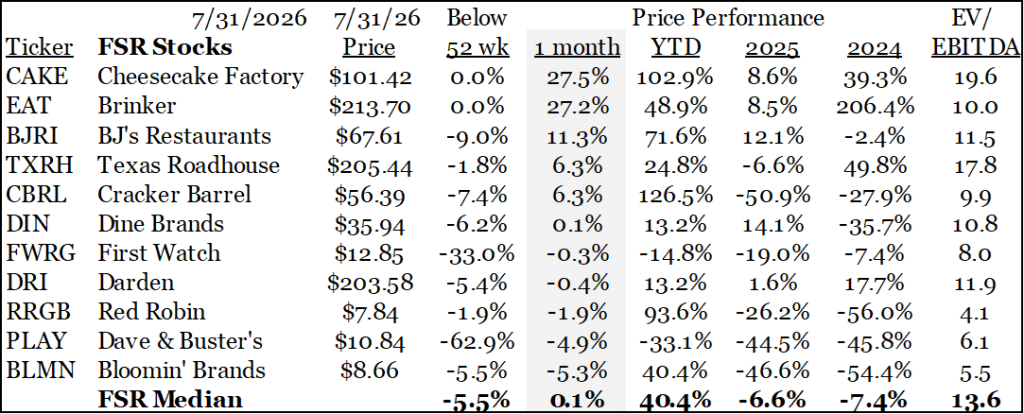
- Sit-down restaurant stocks had mixed performance during July, with Cheesecake Factory reporting record 2Q results as sustained traffic growth, successful menu innovation and strong digital engagement drove market share gains, margin expansion & record revenue.
- BJ’s Restaurants reported 2Q26 comps of +6.5% which beat consensus as its traffic continues to outperform.
- Brinker shares performed strongly, reflecting a recent wave of bullish analyst target increases.