

Americans are reprioritizing debts to protect key assets (like cars & homes), while delaying or skipping student loan payments. Credit scores were slightly lower in 2025, with Gen Z hit hardest & overall results are marked by a growing divide in outcomes between financially resilient & struggling households.
Key Points
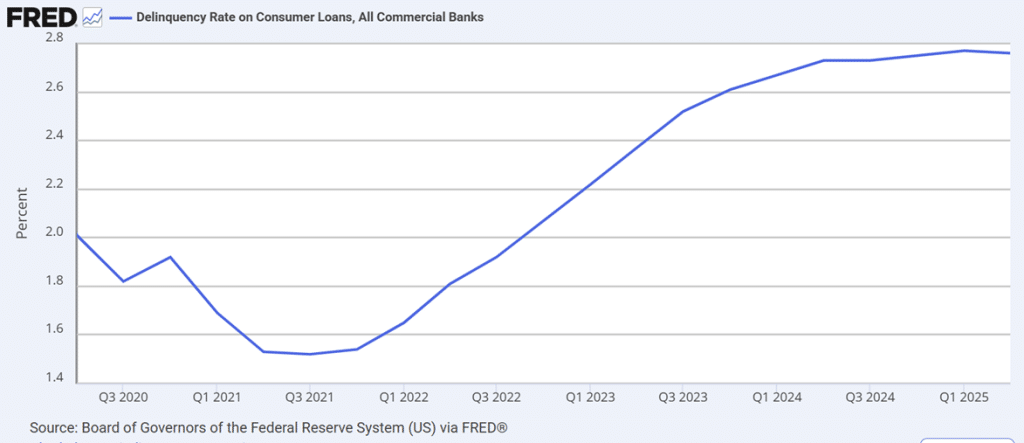
- The average U.S. FICO score fell by -2 points to 715 in 2025 (just -0.3% y/y), reflecting higher credit card utilization (35.5% vs. 29.6% in 2021) & more missed payments. Lower scores can make borrowing costlier, leading to higher interest rates & tighter limits.
- Consumers are prioritizing essential payments: auto loans > mortgages > personal loans > credit cards. Student loans rank lowest priority, even among high-score borrowers.
- Results reflect resumed student loan delinquency reporting.
- Gen Z (age 18 to 29) saw the steepest decline, down -3 points. Large swings in scores reflect volatility tied to student loan debt (34% Gen Z have student loans vs. 17% overall).
- The share of Americans in the middle FICO range (600 to 749) shrank to 33.8% in 2025 from 38.1% in 2021, reflecting the polarization of credit score changes with volatile, uneven financial outcomes.
Source: Average FICO score falls. Who's seeing the largest drop?
