

E-commerce pricing trends indicate broad digital deflation, driven by sharp declines in computers, apparel & electronics, primarily due to oversupply, discounting & weak demand. However, durable goods categories like appliances, tools & furniture remain inflationary, reflecting higher production costs, tariffs on components & steady demand. Despite tariff pressures, most online retailers are absorbing added costs, limiting price pass-through to consumers.
Key Insights
- The overall digital deflation in online pricing shows that tariffs have not yet translated into higher consumer prices in e-commerce (aside from some durable goods categories) as retailers are largely absorbing added costs or offsetting them through various means.
- Major deflationary categories include: computers, apparel, electronics & flowers, and related gifts.
- Computer deflation was driven by global oversupply, factory-gate deflation in China & aggressive U.S. discounting to clear inventory.
- Apparel is under pressure from excess stock, tariff concerns & soft demand, prompting heavy markdowns.
- Strong inflationary categories include appliances, office supplies, tools & home improvement, furniture & bedding, as well as home & garden.
- Appliances, the most inflationary category, was impacted by: elevated production costs; tariffs on imported components; higher logistics expenses; & resilient demand despite overall weak discretionary spending.
- Tools & home improvement category demand remains steady even in a sluggish housing market with prices further pressured by tariffs on imported tools & raw materials.
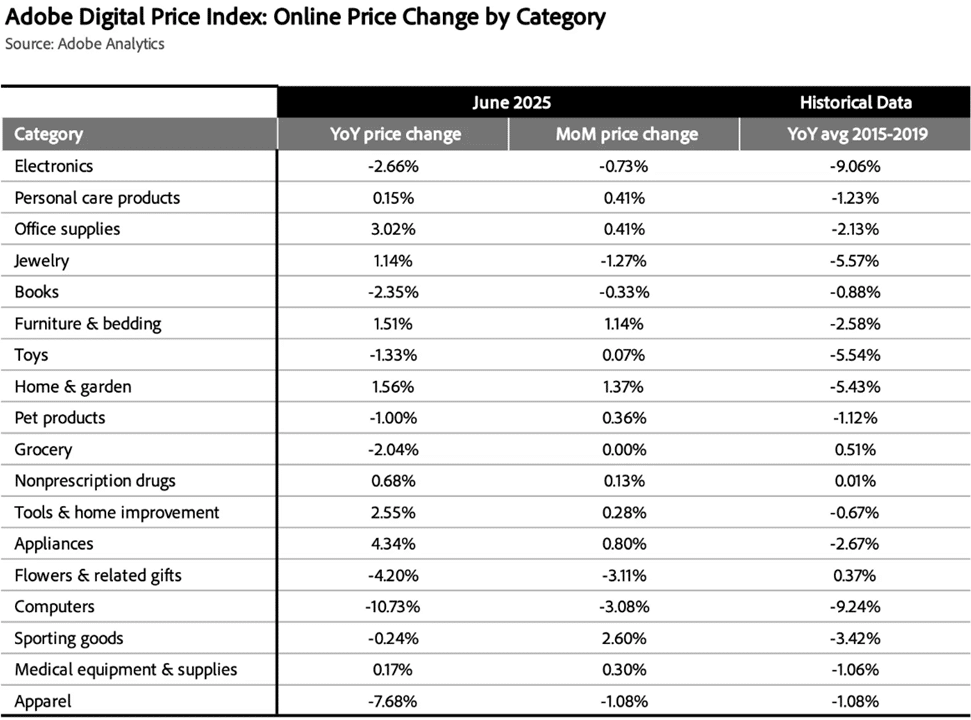
Source: Adobe Digital Price Index
