
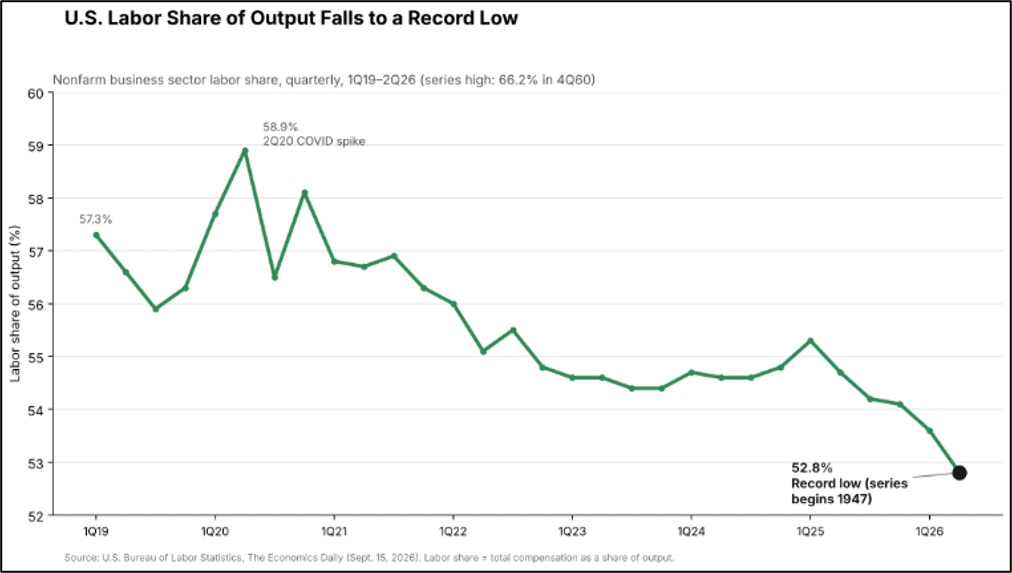
The U.S. economy is producing more than ever. Real GDP grew at a +3.4% annual rate in 3Q26 after +2.2% in 2Q, so the economy keeps setting new highs in inflation-adjusted terms. Yet workers’ share of that output fell to 52.8% in 2Q26, the lowest since the BLS began tracking it in 1947, while corporate margins hit a record. That gap between a growing economy and a shrinking paycheck share is one of the clearest economic explanations for why socialism is polling at its highest approval in Gallup’s history. For Americans, it argues for owning the capital side of the economy rather than depending only on wages.
Insights
- Output is at an all-time high, and labor’s share is at a record low. Real GDP keeps reaching new highs, and nonfarm business output grew +1.7% in 2Q26 while hours worked rose only +0.3%. Most of the gain from that productivity went to capital rather than to compensation, which is why labor share slid from 53.6% in 1Q26 to 52.8% in 2Q.
- Profits are capturing the gains. Fortune reported that corporate margins reached a record 14.9% of GDP even as labor’s share hit its low. Pay rose +2.6%, which is roughly flat or slightly negative after inflation. Companies are growing earnings faster than they are growing payrolls.
- This trend predates AI. Labor share has been falling since the brief covid-era spike to 58.9% in 2Q20, and it is well below its 66.2% peak in 4Q60. The decline began before AI adoption, so the risk is that AI-driven productivity gains pile up further with shareholders unless pay or ownership spreads more widely.
- The politics follow the paycheck. Gallup’s September 2026 poll found 43% of Americans view socialism positively (the highest in its trend since 2010). When workers see record output and record margins alongside a shrinking share for themselves, calls for redistribution, higher corporate taxes & price controls become a natural political response.
- The counterpoint deserves a hearing. Some economists argue that the measured decline is partly an accounting effect of rising depreciation, intangible investment and import prices. They also note that real pay and household wealth have still grown, and that small business remains the most popular concept in Gallup’s poll (with 95% support). Finally, critics of socialist policy add that price controls & wealth redistribution have historically lowered growth, which would shrink the pie workers are seeking a larger share of.
