The Fed released minutes on 10/7 for its 9/15-16 meeting, communicating a higher-for-longer interest-rate outlook, with an emphasis on inflation control over additional economic stimulus. Strong AI-related capital spending & resilient consumption supports economic growth while adding to inflation risks. Higher Treasury yields could continue pressuring housing affordability, borrowing costs & equity valuations.
Key Insights
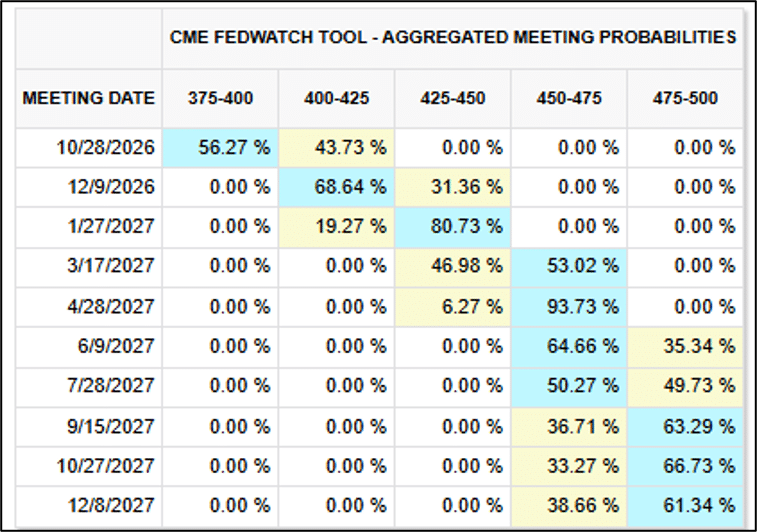
- The Fed unanimously raised its benchmark rate +25 bps to 3.75%–4% & most officials indicated another increase would likely be appropriate by year-end, although future decisions remain dependent on incoming economic data. There is a 68% chance of another +25 bps rate hike by year-end according to the CME Fedwatch Tool (see table below).
- Inflation remains above the Fed's 2% target, with upside risks stemming from higher energy prices, geopolitical tensions & AI-related infrastructure spending.
- Officials remain divided over whether inflation primarily reflects temporary supply disruptions or stronger underlying demand 🤔. While another rate increase is likely, the minutes do not signal an automatic series of hikes.
- Staff projections anticipate inflation returning to 2% in 2029.
- U.S. economic activity remains resilient, supported by consumer spending, business investment & AI infrastructure development.
- Financial conditions remain relatively accommodative despite higher borrowing costs.
- Employment conditions remain broadly stable, with policymakers viewing labor-market risks as more balanced.
- Concerns about persistent inflation currently outweigh the need to support employment through lower interest rates.
- Rapid investment in data centers, computing infrastructure & related equipment is increasing demand for capital, contributing to higher borrowing costs & potentially adding inflationary pressure.
- Longer-term productivity benefits from AI remain uncertain.