U.S. GDP growth remains resilient near +2% as strong AI & broader business investment offset moderating consumer spending according to a Guggenheim research note. Inflation continues to cool gradually, while elevated rates, fiscal pressures & delayed AI productivity gains remain key risks.
Key Insights
- U.S. economic growth remains resilient near +2%, but the expansion is unusually dependent on AI-related capital spending.
- Business investment is broadening beyond AI, with fixed investment tracking +7% to +8%, supported by fiscal incentives, strong corporate profits & lean inventories.
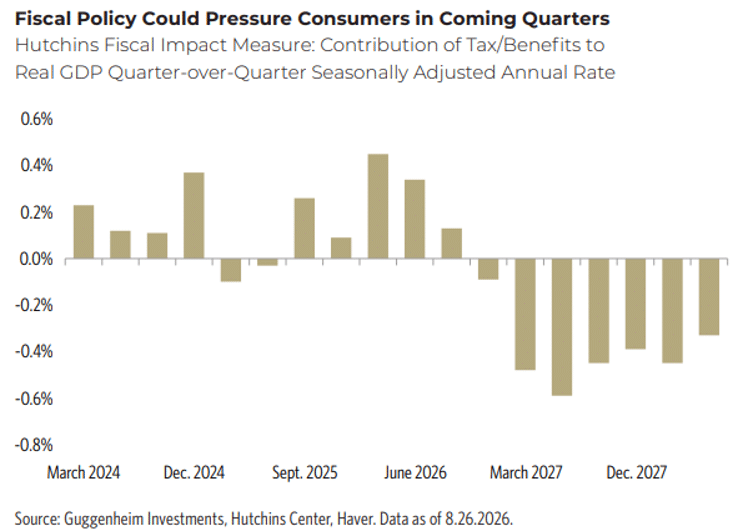
- Consumer spending growth is expected to moderate toward +2% as fiscal support fades, wage growth slows & elevated gasoline prices pressure purchasing power. Lower-income consumers face greater pressure from SNAP/Medicaid cuts, while wealth effects continue supporting higher-income spending.
- Inflation is cooling but remains too high. Core PCE’s three-month annualized rate declined to +2.7% from +3.9% in April, though Guggenheim expects y/y core PCE above +3% through year-end before stabilizing at roughly +2.5% by year-end 2027.
- AI has not yet generated meaningful economy-wide productivity gains. Guggenheim expects modest benefits over the next 1–2 years, making delayed AI productivity a key risk given the economy’s investment dependence.
- The Fed is expected to hike once more in 2026 as it seeks faster disinflation. Treasury yields have risen primarily because of stronger real yields, resilient growth & fiscal concerns, though Guggenheim sees increasingly attractive fixed-income value after the selloff.