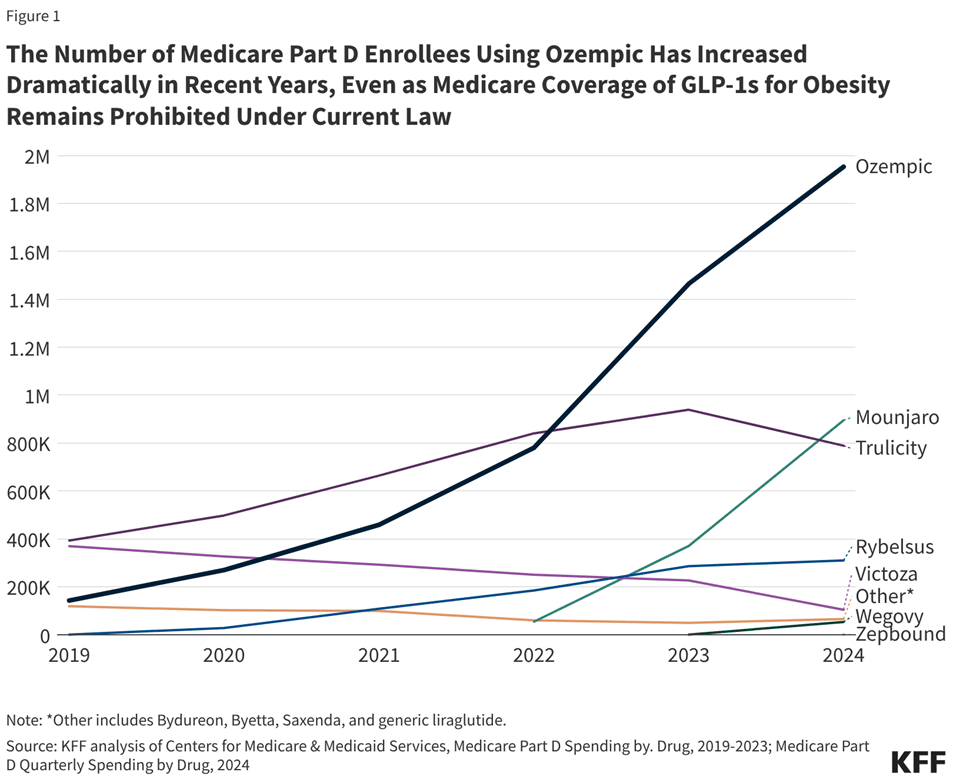
GLP-1 drug adoption is emerging as a potential structural headwind for the restaurant industry, with rising usage expected to meaningfully reduce food consumption, portion sizes & overall restaurant visits over time. While the long-term demand impact could be material, the industry’s ability to adapt through menu innovation & reformulation may help offset some of the pressure.
Key Insights
- At least 12% of adults say they currently take GLP-1 drugs for weight loss, according to a KFF poll published in November 2025. GLP-1 users skew middle-aged & the 50–64 age group has the highest usage, with somewhat lower rates among those 65+ because of Medicare coverage limitations.
- Households using GLP-1 medications cut spending at grocery stores by -5.3% and at fast-food restaurants by about -8% on average, according to a Cornell University study published in December 2025.
- A pill form of injected GLP-1 drugs has the potential to increase usage and, resultantly, the demand for protein & smaller portion sizes. This explains Chipotle’s recent offer of a high protein menu that includes a snack-sized portion of its chicken & steak offerings.
- Many GLP-1 users tend to avoid french fries, desserts, fried foods, bread & beer.
- The restaurant industry has historically adapted to major dietary shifts (low-carb trends, plant-based, calorie labeling), suggesting that menu reformulation & innovation could mitigate this impact over time.