

A strong labor market has meant more bargaining power for workers, new & better jobs for workers to move into, and strong wages for more Americans according to “The Purchasing Power of American Households” blog post from the U.S. Department of the Treasury. While this conclusion is backed with economic data, there needs to be more exploration about the impact of spiking interest rates & rents on the lower income demo.
Comments
- The lowest 25th percentile of wage earners saw their nominal weekly earnings grow by $143, from $611 in 2019 to $754 in 2023. When adjusted for inflation, this amounts to a +3.2% increase in real earnings, the highest growth rate among all income levels.

- The net price growth of the average consumption bundle, which includes all items typically purchased & shown in the bottom dark blue bar below, has been less than the growth of median earnings (gold bar).
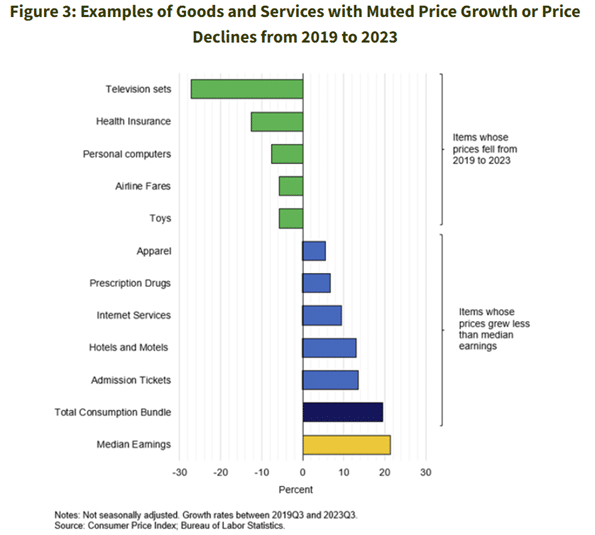
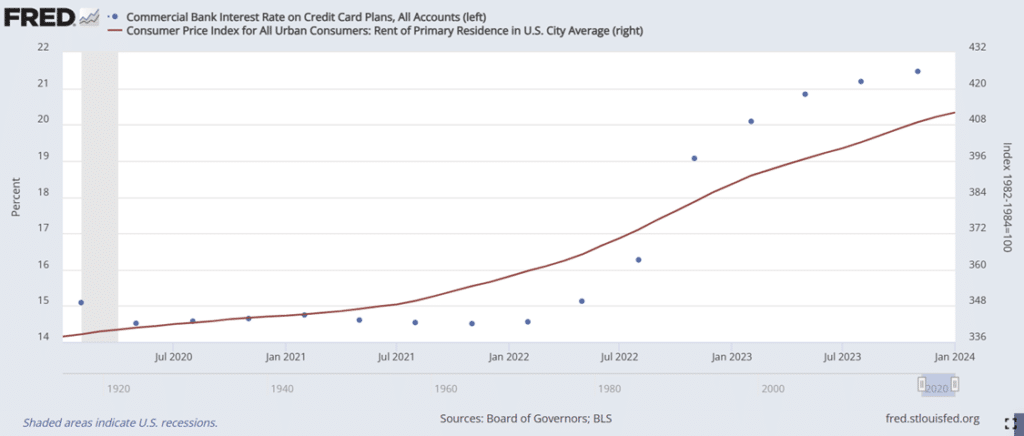
- Without being presumptuous, we will add a little further context to our government’s analysis of the condition of the lower-income consumer by highlighting in the chart below how a sharp rise in interest rates & rents must be considered as an offset to the previously discussed gains in purchasing power. Further, we suggest that a significant increase in childcare costs have also added to the burden of the lower-income demo. Hopefully, the Treasury Department is well positioned to point out to the Fed how much a rate cut could help its cause…
Source: The Purchasing Power of American Households | U.S. Department of the Treasury
