
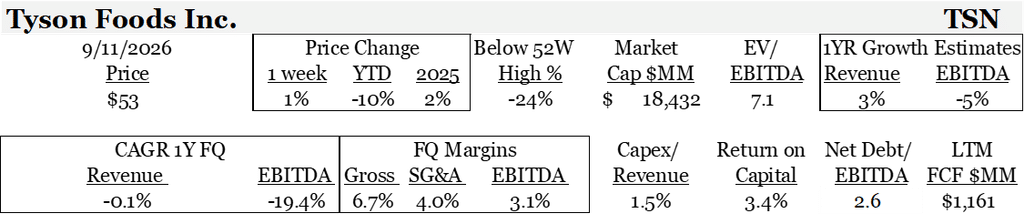
Tyson continues to lean into branded/value-added products as resilient protein demand supports long-term growth. However, a reduction in its FY26 guidance reflects consumer pressure presently weighing on foodservice, tight cattle supplies, volatile beef economics & weaker pork profitability.
Insights
- Consumers remain value-focused, trading both into larger packs for better unit economics & smaller packs for affordability. In any case, protein demand remains resilient.
- Foodservice demand is softening.
- Retail chicken demand remains relatively consistent.
- Beef processing margins remain challenged by tight cattle supplies and elevated cattle prices, while pork processing margins benefit from increased hog availability but remain pressured by lower pork cutout values.
Positioning
- Tyson seeks to drive branded/value-added growth by increasing ad spend by +30% while investing in R&D, innovation & further-processing capacity.
- Tyson, Jimmy Dean & Hillshire Farm remain core brands, while Aidells, TortillaLand & Buena Mesa offer additional growth opportunities.
- Chicken innovation targets convenience, affordability & bold flavors (including Jimmy Dean high-protein offerings & Hillshire Reserve lunchmeat). Value-added branded chicken grew +3.8% vs. +1% broader poultry.
Financial Performance
- Tyson cut its FY26 adjusted operating income guidance from $2.1 – $2.3B to $1.85 – $2.05B & revenue growth from +2.5 – +3.5% to +1.5 – +2.0%, primarily reflecting severe beef margin compression from elevated cattle costs and weaker pricing, while cautious consumers weighed on revenue growth.
