
How do the national restaurant chains stem their continuous traffic declines since covid? Too many of the legacy brands have old, outdated stores in bad markets that are dragging down their system metrics & enterprise valuations. We suggest a “great reset” is in order & now maybe the perfect time for the legacy chains to close ~10%+ of their underperforming locations simultaneously. With restaurant stocks currently in the tank, investors are unlikely to punish companies willing to optimize their systems in pursuit of an opportunity to start fresh.
Insights
- U.S. Foods Holding Corp.’s case volume sales trends tell the story of the national chains ceding share to the independent restaurants which are nimbler & more relevant.
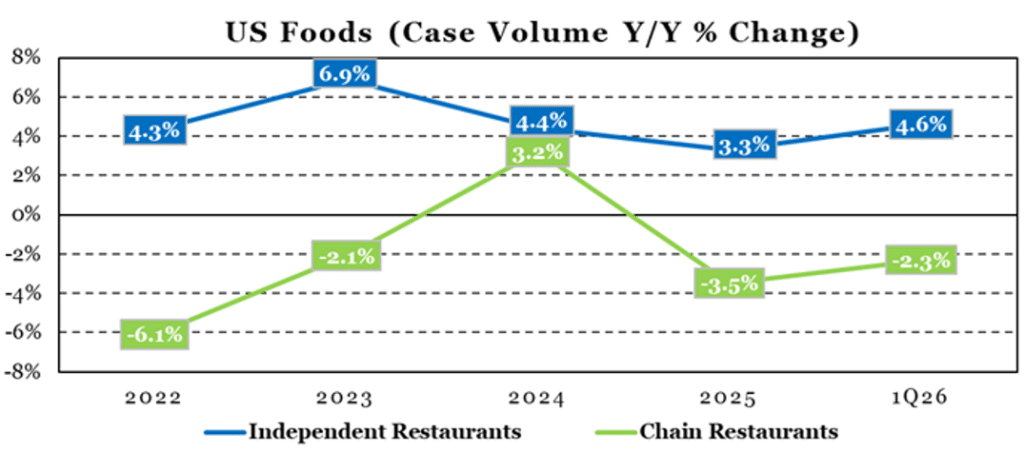
- We suggest that the old, legacy chains would do well to execute mass closures of underperforming stores to reset traffic metrics. The timing is right for the industry to work together to make the needed changes with restaurant stocks in the tank.
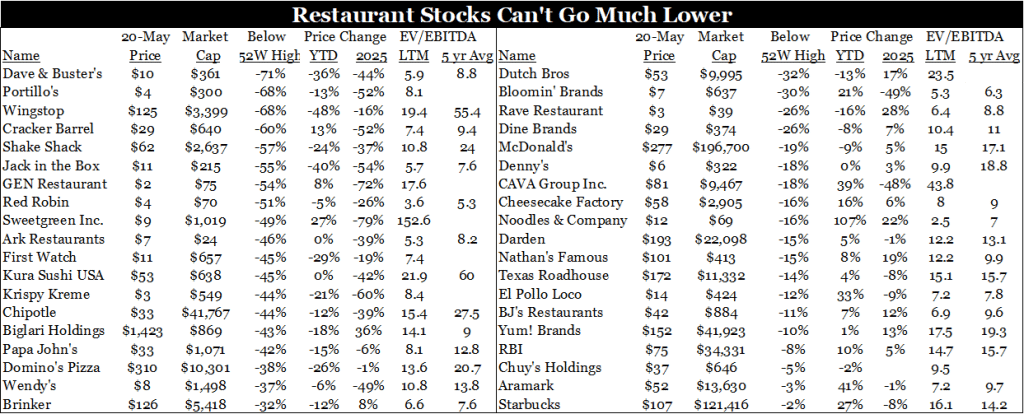
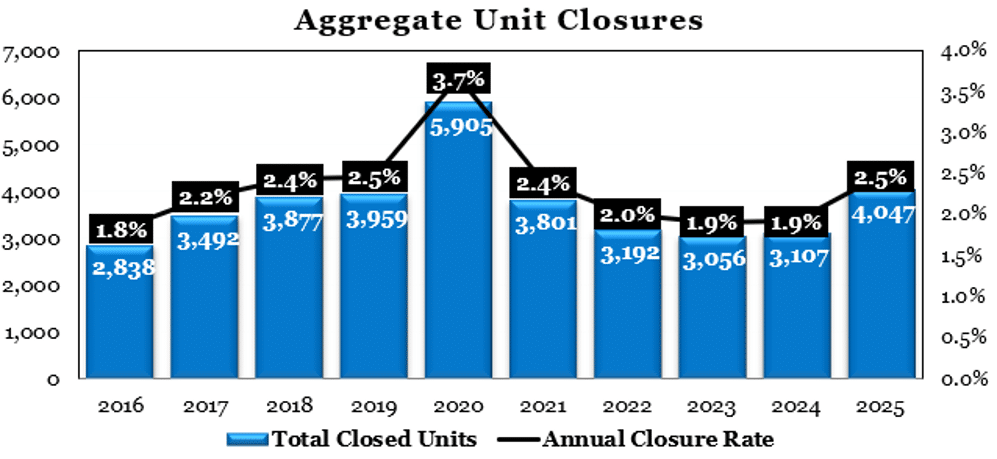
- Legacy chain closure rates could & should be higher. 60-year-old chains must be involved in a steady cycle of creative destruction and often closures & relocations are preferable & necessary as opposed to simple remodels.
- What is the useful life of a restaurant? 30 years?
- One reason that closure rates are not higher is because many franchisors (particularly those with private equity owners) have securitized their royalties (selling the present value of their future royalty streams to bond investors), and resultantly, franchisors cannot close stores without bond investor approval.
- In many cases, the bond investors would be better off pushing for more aggressive closures & the application of their securitization proceeds towards relocations & the development of new prototypes.
- This would certainly benefit all stakeholders, especially restaurant stock investors!
Inquire about RR’s 2026 Unit Sales Growth Analysis Report Here
