
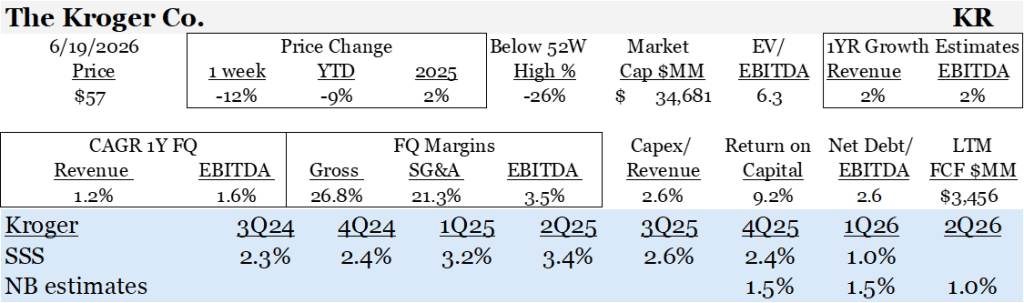
Kroger reported 1Q comps growth of +1.0% excluding fuel, driven by strong performance in e-commerce (+19%), Fresh & private brands which masked core sales weakness. While management reaffirmed FY26 guidance, shares declined as investors focused on consumer spending pressure, rising fuel costs & concerns surrounding future pricing investments.
Insights
- Consumers remain pressured by higher fuel costs & reduced SNAP benefits, increasing demand for value, private label products & affordable grocery options.
- E-commerce continues to gain grocery share & retailers that effectively combine physical stores, delivery & loyalty ecosystems are capturing greater customer spend.
Positioning
- "America's Best Grocer": Fresh, Fast, For You (personalization), Friendly & Affordable.
- Focus on improving value perception, simplifying promotions, increasing store growth & driving productivity to fund future price investments.
- Private brands remain a major growth driver.
- +20% Kroger Precision Marketing → loyalty data, Google, YouTube & TikTok partners.
- E-commerce profitability turned positive ahead of schedule, supported by store-based fulfillment, improved delivery economics and DoorDash & Uber Eats partnerships.
- Cost savings → supplier negotiations, direct sourcing, AI & organizational simplification.
- Increasing store development after several years of limited expansion.
- Kroger closed 3 e-commerce fulfillment centers & shifted volume to store-based fulfillment to improve profitability.
Financial Performance & Guidance
- Comps increased +1% (ex-fuel), driven by e-commerce (+19%), Fresh & Our Brands.
- FIFO gross margin declined -9 bps to 23%, reflecting higher transportation costs & pricing investments partially offset by sourcing benefits.
- Adjusted FIFO operating profit increased +3.4% to $1.5B, helped by high margin e-commerce & Kroger Precision Marketing sales.
- FY26 guidance was reaffirmed, with comps ex-fuel expected to increase +1% to +2%.
- KR shares declined as investors focused on pressured consumers, rising inflation & fuel costs, weaker margin trends & concerns that increased price investments could weigh on profitability.
