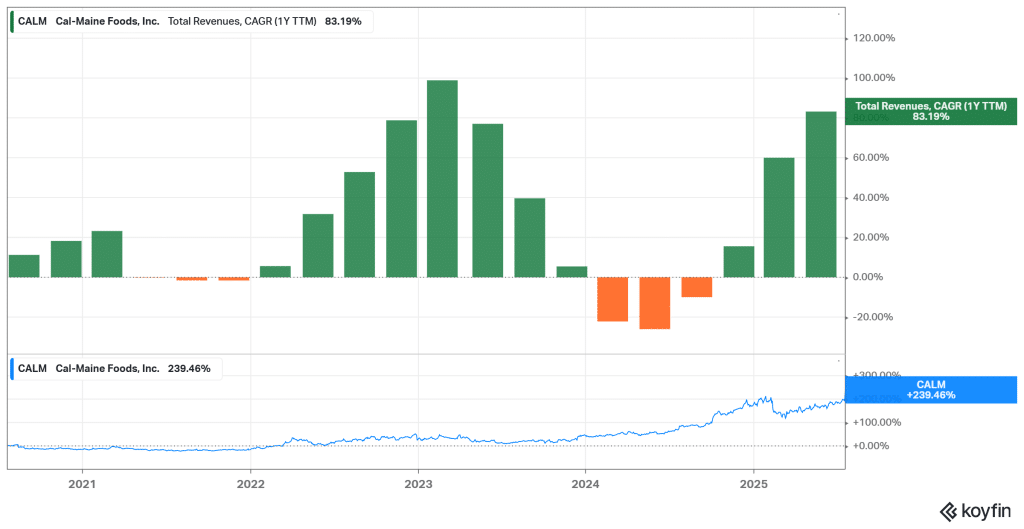
Cal-Maine posted robust FY25 results driven by a +55% increase in egg prices & a +9% rise in volumes, supported by strategic acquisitions like Echo Lake Foods to diversify into prepared foods. Specialty eggs hit record sales, accounting for 39.1% of total 4Q volume, while conventional egg prices surged above specialty due to HPAI-driven supply constraints. Feed cost moderation & cost control helped maintain margins as the company expands production capacity, strengthens biosecurity & targets growth across retail, QSR & foodservice channels.
Cal-Maine Foods, Inc. is the largest producer & distributor of fresh shell eggs in the U.S.
Insights
- Persistent supply disruptions from avian influenza (HPAI) continue to impact the U.S. poultry industry, reducing egg supply & elevating market prices.
- Consumer demand for egg & egg products remains strong, particularly during peak consumption periods like Easter, despite higher prices.
- Feed ingredient costs have moderated compared to prior-year inflationary peaks, supporting farm production stability.
- HPAI virus in dairy cattle, global wild bird infections, & migration-related outbreaks continue to represent significant risks for the egg industry.
Positioning
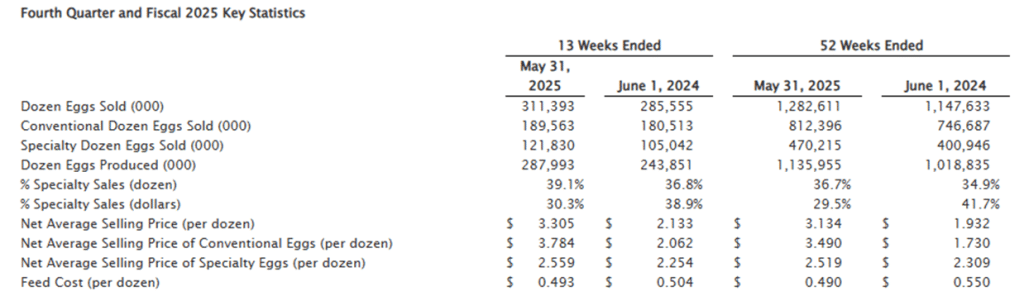
- Cal-Maine sold 311.4MM dozen eggs in 4Q (+9%) & 1.2B dozen during FY25 (+12%), supported by organic growth & strategic acquisitions such as Echo Lake Foods (leading U.S. manufacturer of prepared egg & breakfast products), which helps the company to diversify into prepared foods.
- Sales of specialty eggs (cage-free, organic, pasture-raised) reached a record 121.8MM dozen in 4Q (+16%) & accounted for 39.1% of total volume, reinforcing the company's premium positioning.
- 4Q net average selling price increased +55% to $3.05/dozen. Conventional eggs are currently more expensive than specialty eggs due to market dynamics caused by the HPAI outbreak.
- Feed costs declined -2.2% to $0.493/dozen, supporting margins.
- The expansion of shell egg production capacity, specialty offerings & prepared food products is designed to capture growth across retail, QSR & foodservice.
- The company will continue to invest in biosecurity & supply reliability to mitigate HPAI exposure.