
It has become clear that the chain restaurant sector has become increasingly bifurcated as evident by the difference in 2Q26 comp performance among quality brands. While we would be tempted to attribute the differences purely to marketing, menu & operations, it is becoming obvious that there is something else going on. Yes, Longhorn (2Q comps up +9.5%) & CAVA (+9%) are well run chains, but so are Wendy’s (traffic down -12.5%), Papa John’s (comps -8.3%) and Wingstop (comps -7.5%). This is not to say that the latter 3 chains couldn’t be doing some things better, but rather that these are solid blue-chip restaurant operators with huge brand equity & well-established track records. Even McDonald’s comps were flattish for the quarter. We maintain that there are larger macro/demographic forces at play which can only explain a -12.5% traffic drop at Wendy’s during a quarter when those chains which address wealthier, more resilient demos did just fine.
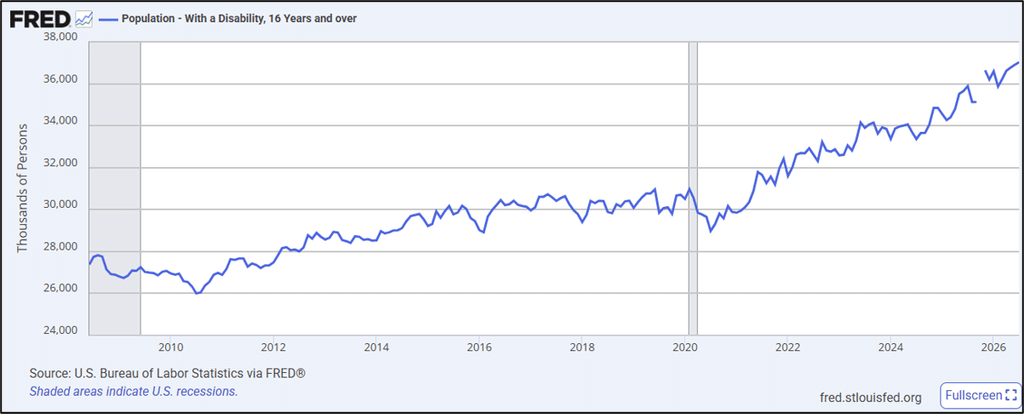
It is appropriate to start with the fact that industry traffic trends have been steadily negative since covid’s 2020 onset. We maintain that the ill-advised lockdowns wreaked havoc on the American psyche (particularly the younger generation), and we further assert that these wounds have not healed and perhaps have deteriorated. Further, the lockdowns prompted other behaviors which are detrimental to restaurant traffic like a big shift to telecommuting which largely remains intact. Most importantly, America was moved online as they sat in their homes consuming social media & streaming content during the lockdowns, creating an epidemic of social isolation which translates into loneliness, anxiety & depression. Anxious, depressed consumers are not good for business, and we recently came across a very telling chart from the government showing that people 16+ self-identifying as disabled has ramped up significantly since 2020 to 37MM currently. Did you catch that, 37MM working age Americans self-identify as disabled? Further, the workforce participation rate among men 16+ (core QSR demo) has fallen to 66.8%, the lowest since 1948, according to the BLS. In 1975, the share was 77.6%. All this counts as a real epidemic with significant implications.
Another contributing factor is that 5MM people have been dropped from SNAP (food stamps) over the last year. H.R. 1 (the 7/25 One Big Beautiful Bill Act) tightened SNAP eligibility and expanded work requirements to more adults (generally ages 18–64) while restricting certain exemptions & limiting eligibility for some non-citizens. Declining SNAP participation represents an incremental spending headwind for lower-income consumers and lower SNAP benefits reduce disposable food budgets, likely pressuring QSR traffic & check sizes as consumers prioritize grocery spending & trade down.
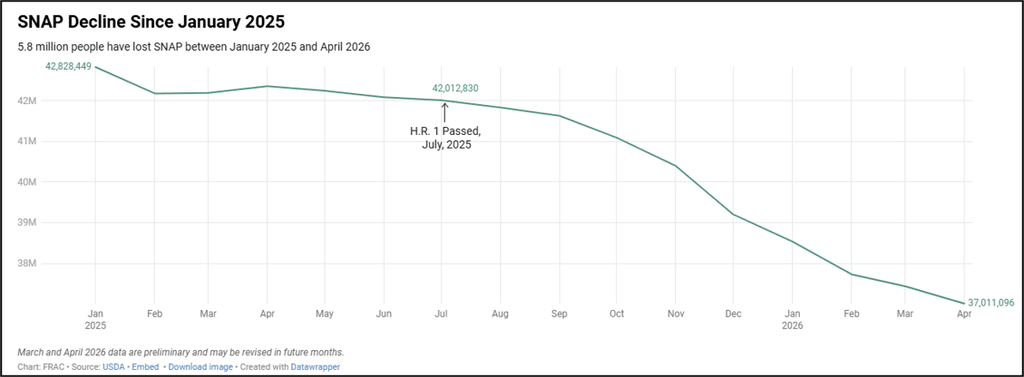
Source: SNAP Participation Dashboard - Food Research & Action Center
Unfortunately, there are more contributing factors worth considering. While federal student-loan payments resumed in October 2023, the expiration of the September 2024 on-ramp marked a more important inflection point for consumer credit as it delayed the reporting of missed payments. Since early 2025, student-loan delinquencies and defaults have surged as those missed payments became reportable, with the New York Fed estimating millions of borrowers entered default in late 2025 & early 2026. Financially challenged consumers are likely to reduce discretionary food-away-from-home occasions and increasingly demand value-oriented QSR offers. This is likely to pressure frequency, delivery and higher-ticket restaurant occasions.
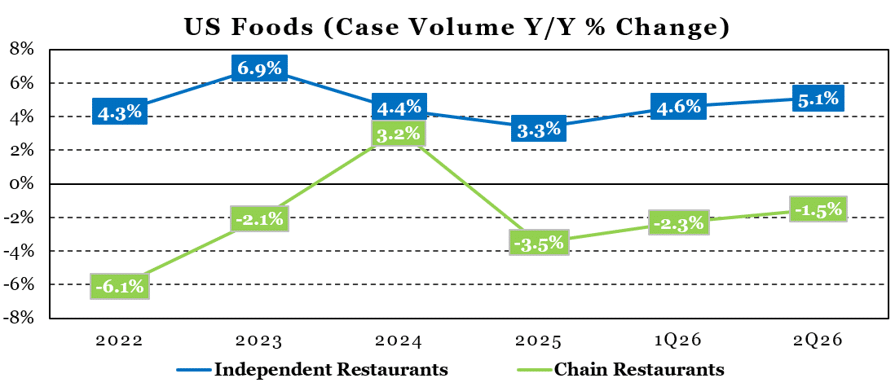
Lastly, we would point out that consumers are becoming more health conscious, and this has negative implications for fast food. Gallup recently reported that U.S. alcohol consumption remains at a historic low with just 54% of adults drinking alcohol (the lowest level since 1939). Health concerns appear to be contributing to the decline as 51% of Americans now believe that even 1–2 alcoholic drinks per day are bad for health, nearly double the 27% who held that view in 2001. This health trend plays into the hands of independent restaurants which are nimbler in their ability to react to consumer dining tends than national chains. As outlined in the following chart, US Foods’ independent case growth far exceeds its chain case performance (explaining this food distributor’s marketing focus on the independent restaurant segment).
Conclusion
Does exceptional 2Q traffic pressure among those chains oriented towards the most vulnerable demo (young & poor) reflect cyclical or secular trends? Well, there was $4 gas and a major war launched in Iran during the quarter. Further, we acknowledge that significant menu price increases since covid are also responsible for ongoing traffic pressure. However, 2Q26 results are significant and worth a closer look that bears scrutiny beyond long-term developing trends. Maybe the core QSR demo reached a snapping point during the quarter?
Where does the industry go from here? We think it starts with recognizing that there is a real crisis in the United States that is not being addressed and which is plaguing the restaurant industry. In a way, the chains represent an important part of the solution to an epidemic of loneliness, anxiety and depression. What better way to counter this challenge than with marketing campaigns urging Americans to get off their phones long enough to meet with friends & family to break bread together at a local restaurant? The chains also need to do everything they can to return to value pricing while simultaneously addressing health concerns that are becoming more evident for the younger demo. We imagine that there are many other creative ideas that the chains could implement in the pursuit of becoming part of the solution. Let’s go!!
Learn More About RR Subscription
Order Report
