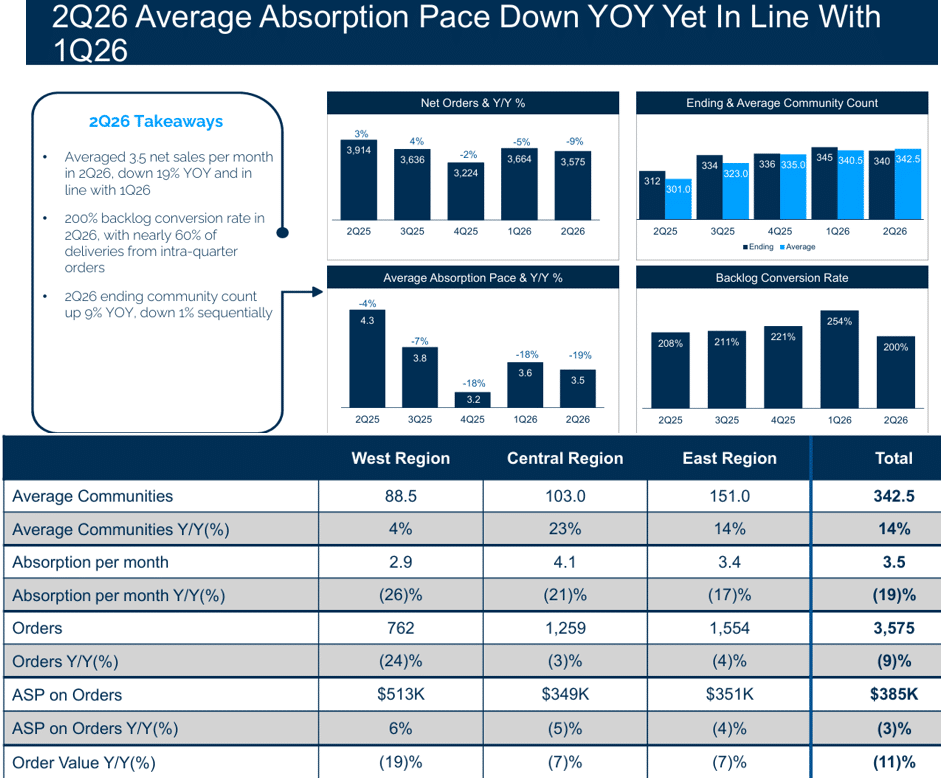
The U.S. housing market remains constrained by elevated mortgage rates, affordability challenges & economic uncertainty, keeping incentives elevated & homebuying activity subdued. Despite these headwinds, entry-level & first move-up demand remains resilient, while easing construction costs, healthy consumer credit quality & tighter housing inventory point to improving long-term industry fundamentals.
Key Insights
- Homebuyer affordability pressure reflects elevated mortgage rates & home prices and broader economic uncertainty, resulting in slower housing demand despite stable underlying interest.
- Housing demand remains resilient at the entry-level & first move-up segments, with temporary declines in mortgage rates continuing to generate meaningful increases in buyer activity.
- Consumer psychology remains a key factor influencing home purchases, as buyer credit quality remains healthy with demand constrained by affordability rather than credit availability.
- The homebuilding industry remains highly sensitive to interest rate movements, with incentive levels, pricing & demand closely tracking changes in mortgage rates.
- Elevated incentives remain an industry-wide feature of the current housing market, although management believes competitive pricing pressure is beginning to stabilize as industry inventory remains constrained.
- Homebuilders benefit from easing construction costs (lower labor & material costs) although higher land costs & recent increases in lumber prices represent near-term margin headwinds.