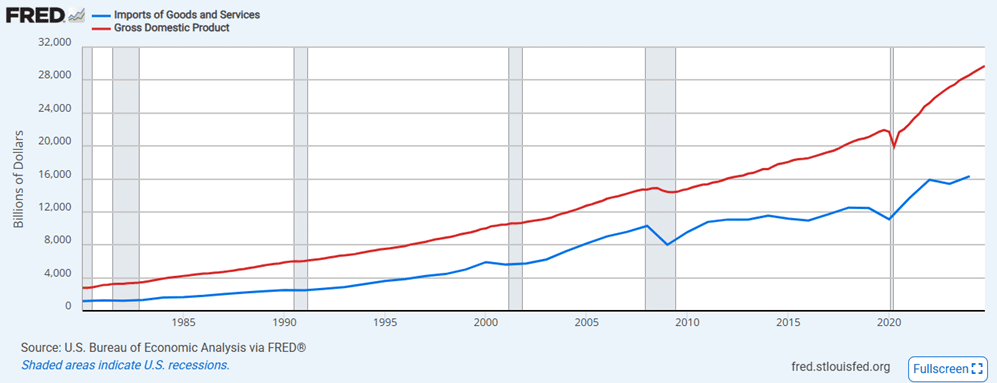
The US$ has a serious problem. The Federal government spent $6.75T during FY24, but only took in $4.9T in revenue, leaving a $1.8T annual deficit. Since it is nearly impossible to cut spending because of institutional inertia & the prospect of raising income taxes by close to $2T/year would send the U.S. into a depression, there doesn’t seem to be a way for Uncle Sam to avoid a default… This is where tariffs come in. The U.S. imports $16T annually (54% of our total $29.7T GDP). A 20% tariff across the board could raise $3.2T in additional taxes – wiping out the deficit with enough left over to lower income taxes by $1T. This is like value-added consumption taxes (VAT) on goods & services collected by 175 countries (including EU member states). Yes, prices go up, but domestic manufacturing comes roaring back as companies seek to gain a price advantage by avoiding tariffs, bringing back high-paying jobs that have been offshored over the last several decades. Long-term GDP growth should accelerate & the U.S. has the potential to export some of what it manufactures domestically. Not only is it a reasonable plan, but we may also have no other choice!
Comments
- There is currently no fixing the deficit & investors in U.S. Treasuries are quickly losing patience.
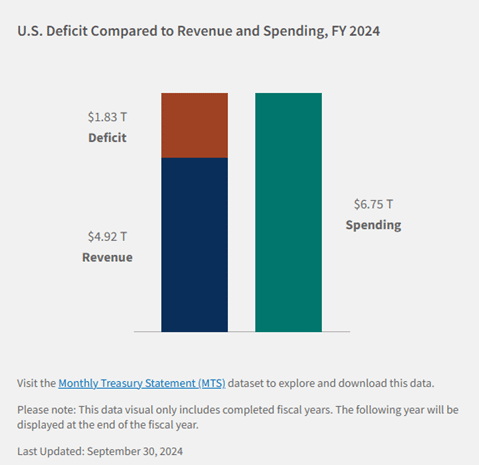
Source: National Deficit | U.S. Treasury Fiscal Data
- Importing 54% of total GDP represents a clear national security threat in more ways than one.
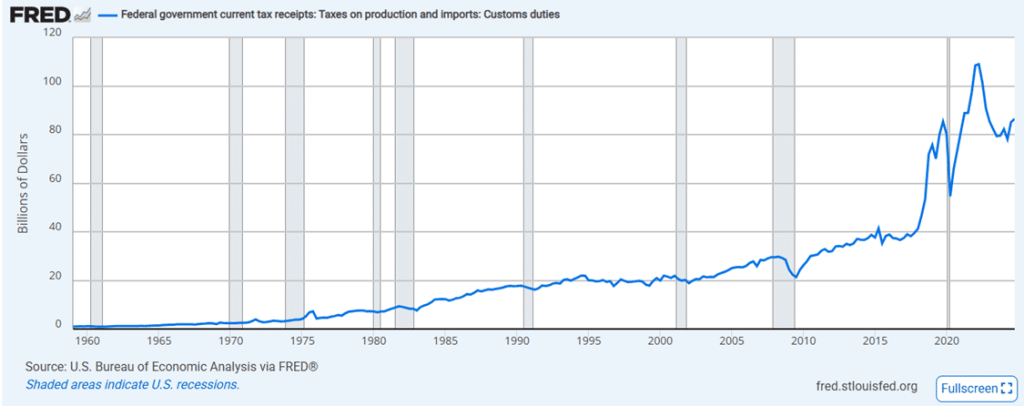
- Currently, we only collect $86B in tariffs. NoBull can’t find how much the U.S. is paying for tariffs collected on U.S. exports to other countries…