
CVS’ results reflect skyrocketing health care costs that are materially pressuring its profitability. Notably, the company’s MBR (medical benefits ratio – or health insurance payouts vs. premiums collected) has steadily increased from a low of 70.3% during 2Q20 (covid), to 84.1% during 2Q21, to 86.2% during 2Q23, and 89.6% most recently during 2Q24. While there is no explanation about why people are flocking to the doctors to receive more services/procedures, it is clear that the population has become much sicker. A shocking model by the University of Wisconsin Population Health Institute suggests that 80% of health outcomes are related to lifestyle & just 20% to clinical care, suggesting that there are other factors at work here. In any case, CVS announced that it is on track to achieve its 3-year goal of closing 900 stores by the end of this year.
Big Picture
- Everyone MUST listen to Tucker Carlson’s recent interview with Casey Means (a Stanford-educated surgeon) & her brother Calley Means (a lobbyist for pharma & the food industry). The life-transforming information in this podcast provides needed context about the current troubles of the consumer economy which is marked by steady post-covid retail traffic declines.
- Notably, the model below from the University of Wisconsin Population Health Institute reveals that 80% of health outcomes are driven by: social & economic factors – 40%; health behaviors – 30%; and physical environment – 10%. Judging by CVS’ 2Q24 performance, it is easy to surmise that these environmental factors have deteriorated significantly post-covid.
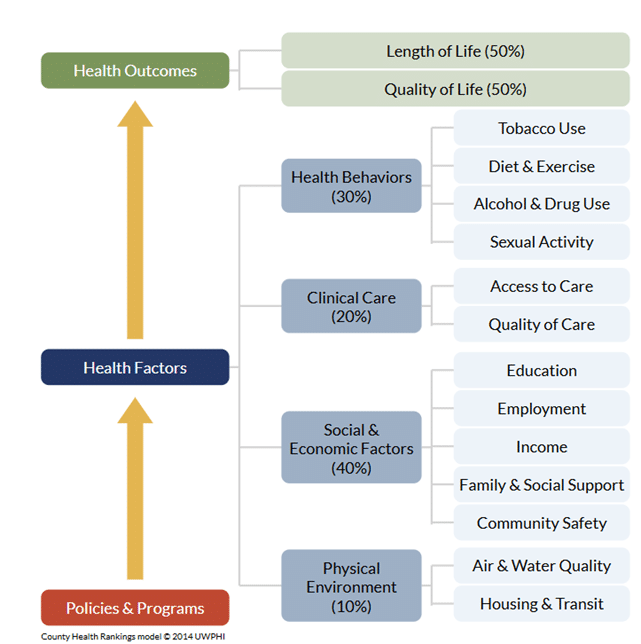
Source: Explore health topics | County Health Rankings & Roadmaps
CVS 2Q24 Revenue Trends

CVS 2Q24 Margin Trends


